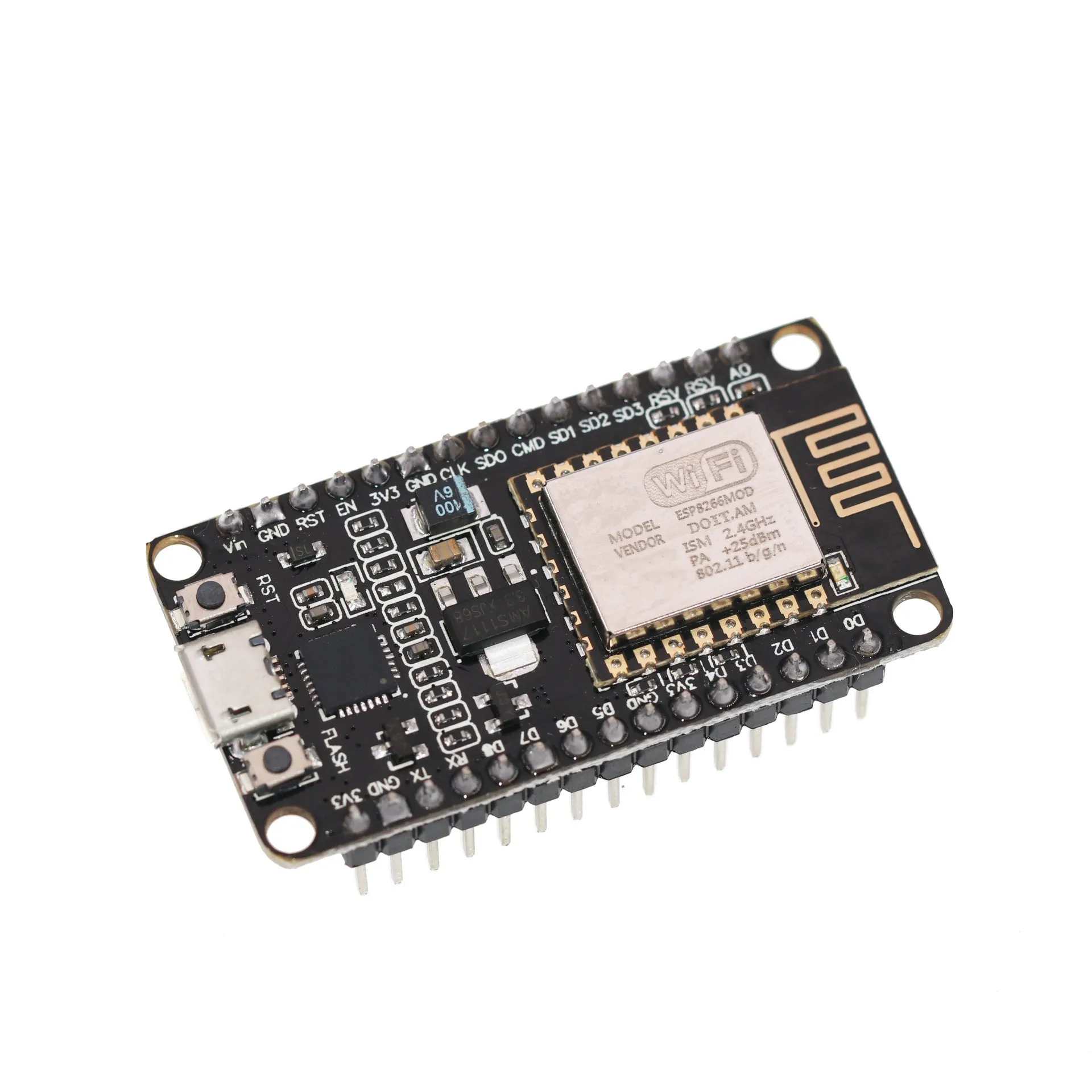
NodeMcu Lua WIFI development board with ESP8266 using CH340G interface for Arduino-like hardware IO, featuring event-driven network API and Lua script programming for rapid IoT application development, delivered with standard module packaging


NodeMcu Lua WIFI development board with ESP8266 using CH340G interface for Arduino-like hardware IO, featuring event-driven network API and Lua script programming for rapid IoT application development, delivered with standard module packaging
NodeMcu Lua WIFI Development Board with ESP8266 and CH340G Interface for IoT Applications

The NodeMcu Lua WIFI development board represents a streamlined approach to Internet of Things prototyping, combining the widely-adopted ESP8266 wireless module with an accessible programming environment. This board addresses the common challenge of rapid IoT development by providing Arduino-like hardware IO capabilities alongside event-driven network APIs. The implementation of the CH340G interface chip as a replacement for CP2102 simplifies the connection process, while the compact 5mm by 5mm form factor makes it suitable for space-conscious applications. Developers can leverage Lua scripting to interactively program hardware operations, reducing the traditional configuration overhead associated with embedded systems development.
Features and Construction
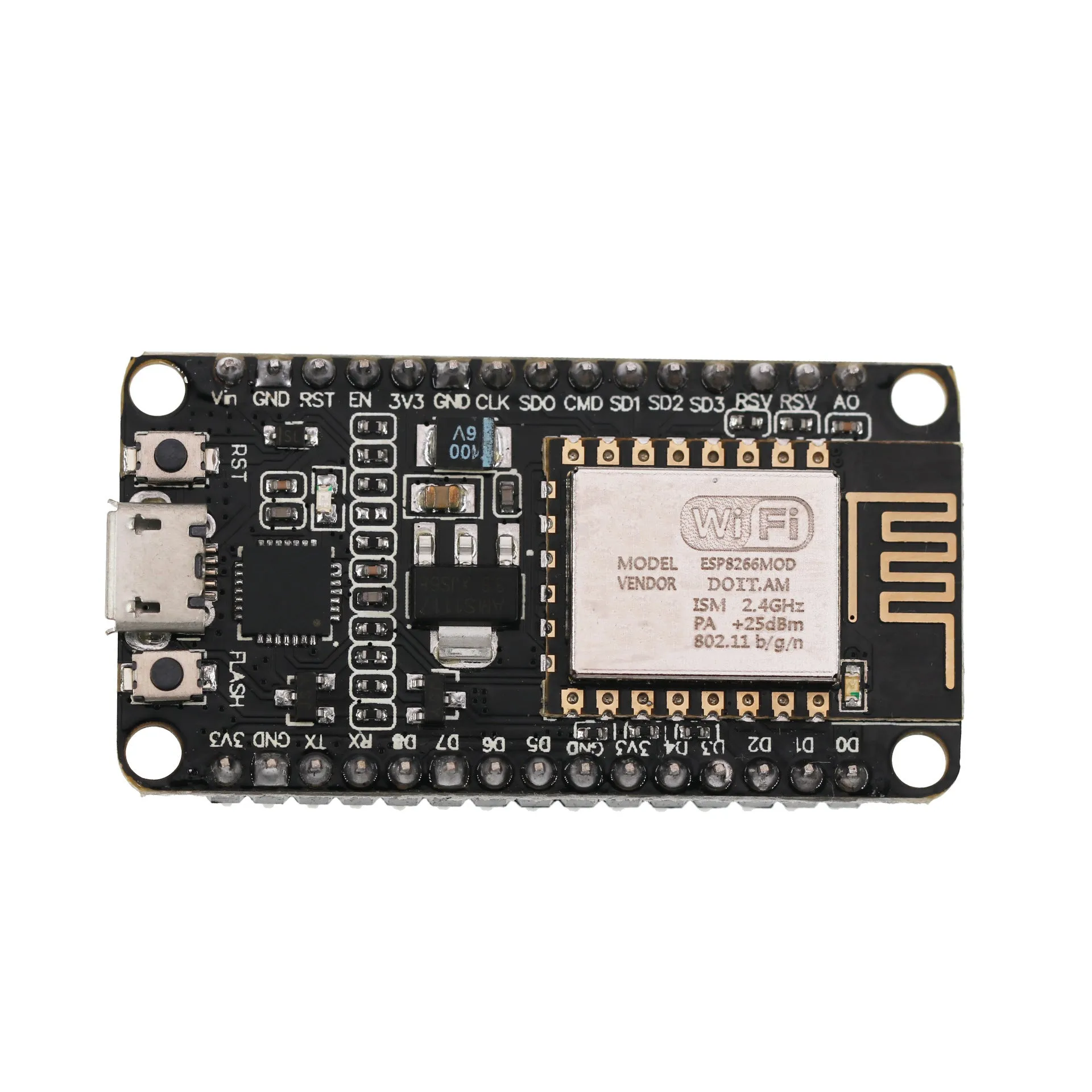
The NodeMcu development board integrates several key components that facilitate efficient IoT prototyping. The ESP8266 wireless module provides robust Wi-Fi connectivity while maintaining compatibility with Arduino-style hardware interfaces. This combination allows developers familiar with Arduino ecosystems to transition smoothly to wireless applications without learning entirely new programming paradigms.
Material and Build
Constructed around the ESP8266 wireless module, the board utilises a CH340G interface chip for serial communication between the microcontroller and development tools. This specific implementation replaces the earlier CP2102 interface, offering similar functionality with potential availability advantages. The board's construction follows standard PCB manufacturing techniques, with components arranged to support the 5mm by 5mm microcontroller footprint while providing accessible IO pins for external connections.
Size and Practical Fit
With dimensions of just 5mm by 5mm, the ESP8266 microcontroller represents a compact solution for IoT applications where physical space is constrained. This small form factor enables integration into various prototypes and final products without requiring significant board real estate. The development board's design accommodates this miniature microcontroller while providing accessible connection points for developers during the prototyping phase.
Uses and Placement

The NodeMcu Lua development board serves multiple application scenarios, from educational projects to professional IoT prototypes. Its combination of wireless connectivity, accessible programming, and hardware compatibility makes it suitable for various implementation environments where rapid development and testing are priorities.
Event or Professional Use
For professional IoT development, the board's event-driven network API facilitates creation of networked applications using familiar Nodejs-style programming patterns. This approach allows developers to implement complex network behaviours without delving deeply into low-level networking protocols. The no-reset operation requirement further streamlines the development workflow, enabling quicker iteration cycles during prototyping and testing phases.
Everyday Home Use
In educational or hobbyist contexts, the Lua scripting environment provides an accessible entry point for those learning embedded systems programming. The Arduino-like hardware IO allows experimentation with sensors, actuators, and other electronic components using simplified code structures. This combination of approachable programming and physical computing capabilities makes the board suitable for DIY smart home projects, classroom demonstrations, and personal technology experiments.
Benefits and Buying Value

The NodeMcu development board offers several practical advantages for IoT developers seeking efficient prototyping solutions. By combining multiple development-friendly features in a single package, it reduces the time and complexity typically associated with wireless embedded system creation.
Reuse and Low Maintenance
The board's standard packaging as a complete wireless module enables straightforward integration into various projects without additional component sourcing. The no-reset operation requirement simplifies the development process, eliminating one common point of friction during programming cycles. These characteristics contribute to reduced maintenance overhead during both prototyping and deployment phases.
Why Choose This Product
This development board provides a balanced combination of wireless capability, programming accessibility, and hardware compatibility that accelerates IoT application development. The event-driven API structure reduces redundant configuration work, while Lua scripting enables interactive programming approaches. For developers seeking to rapidly prototype wireless applications with Arduino-style hardware interfaces, this board offers a practical foundation with minimal setup complexity.