
Lithium Battery Charging and Protection Integrated Board with 5V Input and 3A Overcurrent Protection for Safe Power Management in Compact Projects
Blue
£5.98
Sale price
£5.98
Regular price
Skip to product information

 This integrated circuit board is engineered for developers and hobbyists who need a reliable, all-in-one solution for managing single-cell lithium-ion or lithium-polymer batteries. It combines a 5V-input charger with a precise 4.2V cut-off and vital protection circuitry that guards against over-discharge and short circuits. By handling both power delivery and battery safety, it removes the complexity of designing separate systems, allowing you to focus on your core project functionality. Its diminutive 2.6 cm by 1.7 cm size makes it a practical choice for adding battery management to portable gadgets, DIY electronics, and compact robotic platforms without sacrificing valuable space.
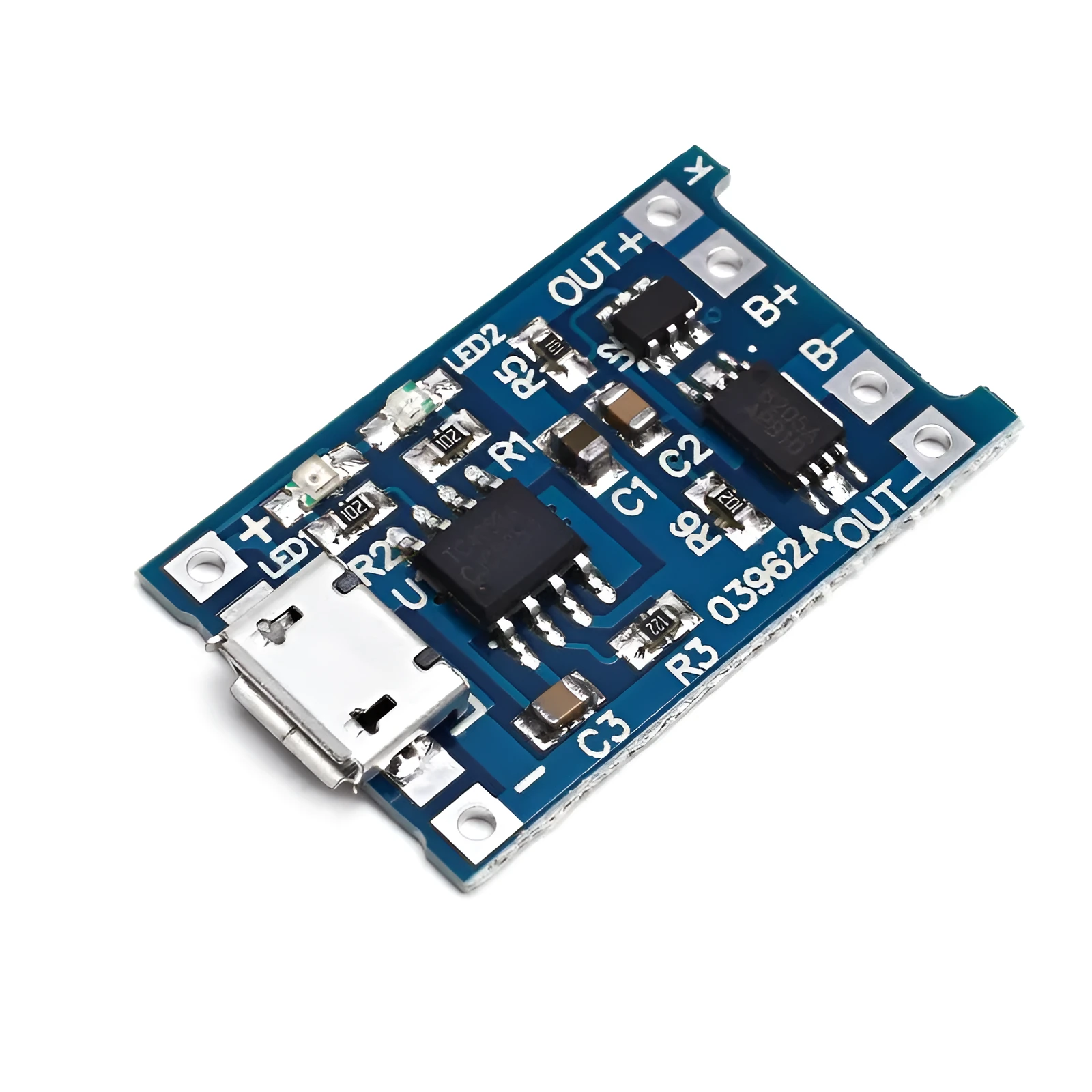 This section details the exact performance parameters and construction of the lithium battery management board, providing the concrete data needed for informed integration into your electronic designs.
 From professional prototyping to hobbyist workshops, this board serves as a fundamental building block for any project powered by a single lithium cell. Its set-and-forget operation simplifies design requirements.
 Investing in a dedicated protection board yields measurable advantages in project reliability, safety, and cost-effectiveness over the long term.


Lithium Battery Charging and Protection Integrated Board with 5V Input and 3A Overcurrent Protection for Safe Power Management in Compact Projects
£5.98
Sale price
£5.98
Regular price
Lithium Battery Charging and Protection Board: Safeguard Your Projects with 3A Overcurrent Protection
Technical Specifications and Build Quality
Precise Charging Parameters
The board's charging circuit is calibrated for accuracy. It accepts a 5V DC input, a voltage commonly supplied by USB ports or standard wall adapters, and delivers a controlled charging current up to 1000mA (1A). Charging ceases automatically when the battery voltage reaches 4.2V, with a factory-set tolerance of just ±1%. This high level of precision is crucial for lithium chemistry, as consistently exceeding 4.2V can degrade battery health and capacity over repeated charge cycles.Defined Protection Thresholds
Battery protection is defined by specific, measurable thresholds. The over-discharge protection circuit disconnects the load when battery voltage falls to 2.5V, preventing the deep discharges that can permanently damage lithium cells. The overcurrent protection is set to activate at 3A. If a fault or short circuit causes the drawn current to exceed this limit, the board will interrupt the circuit almost instantly, protecting both the battery and your connected electronics from potential harm due to excessive current flow.Compact and Durable Construction
The board is built on a fibreglass substrate, known for its electrical insulation properties and resistance to warping under heat. All components are surface-mounted, creating a low-profile and robust assembly that withstands the vibrations and handling typical in prototype and finished projects. The small 2.6 cm x 1.7 cm footprint is a direct result of this efficient SMT design, proving that comprehensive protection doesn't require a large amount of real estate on your project's main board.Practical Applications and Integration
For Professional Prototyping and Product Development
Engineers and product developers can use this module to quickly add certified battery charging and safety features to prototypes, reducing development time for portable electronics, IoT sensors, or handheld test equipment. The defined 3A protection current allows for the calculation of safe operating parameters for the end product's components, while the compact size facilitates integration into final housing designs without major layout compromises.For Makers and DIY Electronics Hobbyists
For the home enthusiast building robots, drones, or custom gadgets, this board provides peace of mind. The knowledge that your lithium battery—which can be volatile if mistreated—is guarded by a 2.5V low-voltage cut-off means you can experiment without the constant worry of accidentally ruining an expensive cell. The straightforward wiring (input, battery, output) makes it accessible even for those new to electronics, turning a complex safety requirement into a simple connection task.Versatility Across Project Types
The board's utility extends beyond its primary function. It can be used as an educational tool to demonstrate lithium battery management principles. It's also ideal for refurbishing or upgrading older devices with modern lithium batteries, as it provides the necessary charge control and protection that older nickel-based battery circuits lack. Its blue solder mask aids in visual identification during assembly in a crowded project box.Tangible Benefits and Long-Term Value