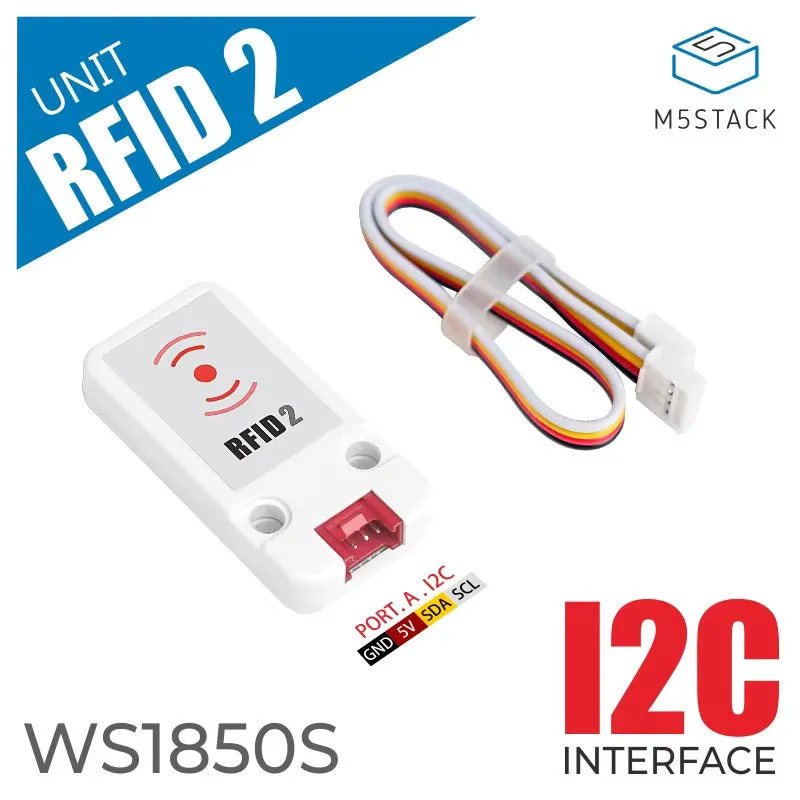
M5Stack RFID sensor WS1850S 13.56MHz module for Arduino and UIFlow Internet of Things development with 64-byte buffer, ISO14443A MIFARE NTAG protocols, and two Lego-compatible mounting holes


M5Stack RFID sensor WS1850S 13.56MHz module for Arduino and UIFlow Internet of Things development with 64-byte buffer, ISO14443A MIFARE NTAG protocols, and two Lego-compatible mounting holes
M5Stack RFID 13.56MHz Sensor Module for IoT Development with Arduino and UIFlow Support

This RFID sensor module, designated WS1850S, provides developers and educators with a practical component for Internet of Things projects requiring contactless identification and data transfer. Operating at the standard 13.56MHz frequency, it supports common RFID protocols while offering integration with accessible development platforms. The module's specifications make it suitable for prototyping access systems, interactive objects, or educational demonstrations where reliable short-range communication is needed. Its compatibility with both Arduino and UIFlow environments lowers the technical barrier for creating functional IoT applications.
Features and Construction

The module's technical specifications define its operational capabilities within embedded systems. These parameters determine suitable applications, from basic identification to more complex data exchange scenarios where buffer size and communication speed matter.
Material and Build
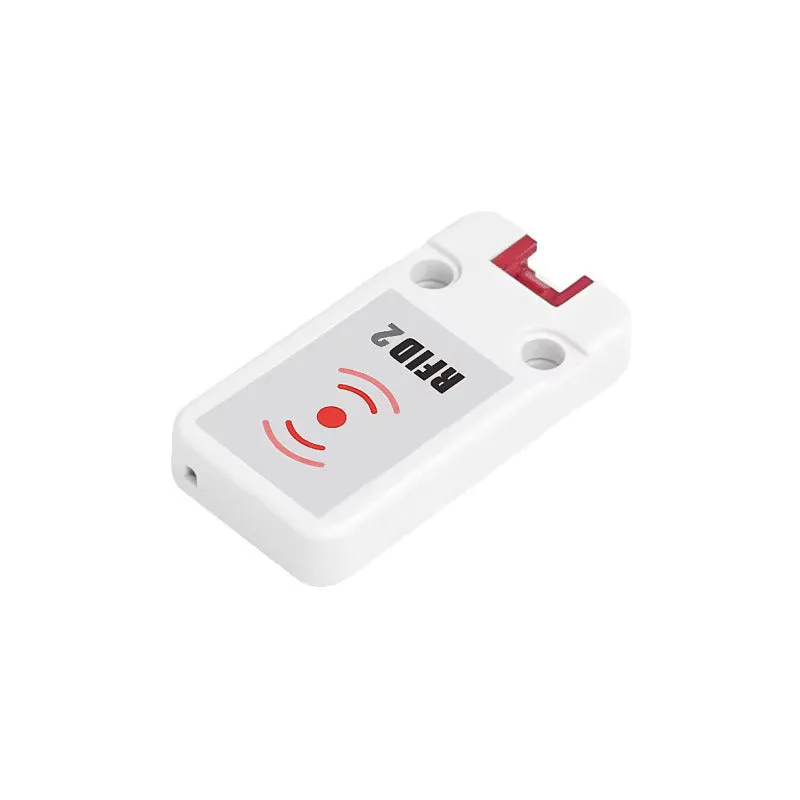
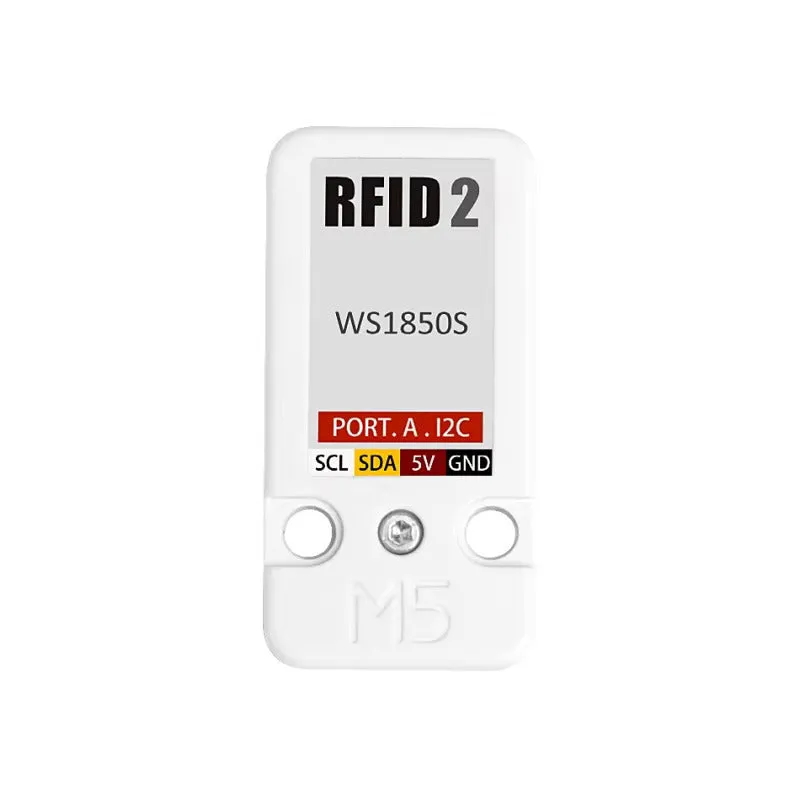
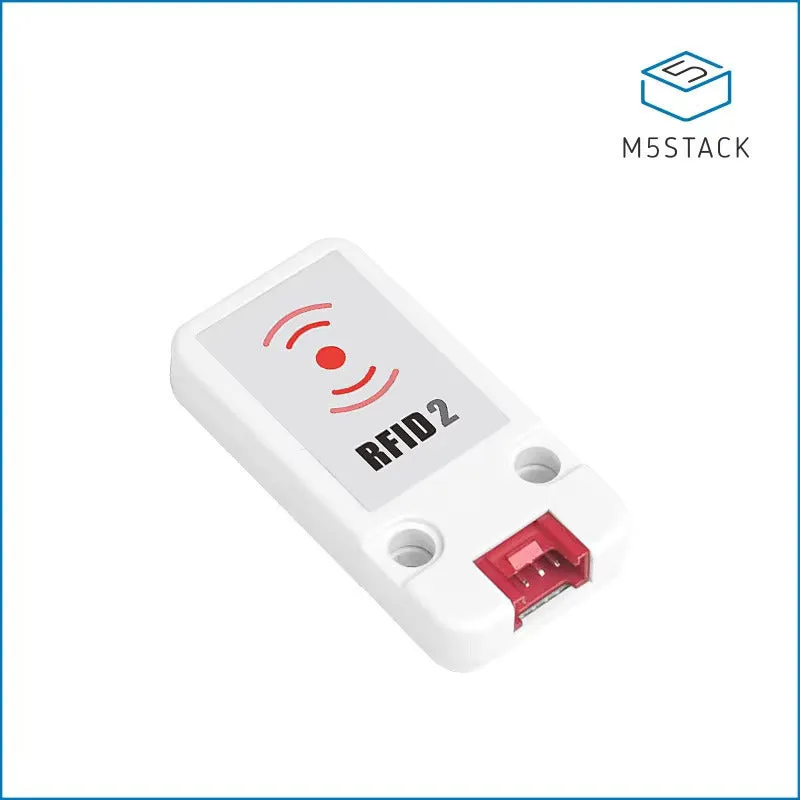
Constructed as a standard electronic module, the unit contains the necessary circuitry for RFID communication at 13.56MHz. It includes an I2C interface for connecting to host controllers, with a transceiver buffer of 64 bytes for handling data packets. The module supports ISO14443A, MIFARE, and NTAG protocols, covering common use cases in access cards and contactless tags. Two Lego-compatible holes are integrated into the 7x2 unit design, providing a straightforward mechanical mounting option for prototype assemblies without requiring specialised brackets.
Size and Practical Fit
The compact 7x2 unit size allows the module to be incorporated into space-conscious projects. Its dimensions are compatible with many prototype enclosures and mounting systems common in maker and educational settings. The inclusion of Lego-compatible holes offers a familiar and tool-free attachment method, particularly useful for temporary demonstrations or iterative design projects. This physical design supports experimentation where component placement might change frequently during the development process.
Uses and Placement
The module's supported protocols and platform integrations guide its application in both learning environments and functional prototypes. Its specified reading distance and operational temperature range inform where and how it can be reliably deployed.
Event or Professional Use
In professional prototyping or event demonstrations, the module can serve as the sensing component for interactive installations, attendance tracking systems, or product authentication proofs of concept. Its compatibility with standard RFID protocols means it can interact with commercially available tags and cards. The specified data storage of over 10 years supports applications where information persistence is important, such as in asset tracking or maintenance logging systems. The operating temperature range allows use in various indoor environments and some protected outdoor settings.
Everyday Home Use
For home hobbyists or educational purposes, the module facilitates projects like smart lock controllers, inventory management for collections, or interactive toys. The Arduino and UIFlow support provides accessible coding options, from block-based programming to Python scripts. The short reading distance is practical for controlled, intentional interactions typical in home projects, such as triggering an action when a specific object is brought near. The low sleep power consumption figure contributes to energy-efficient designs suitable for battery-powered applications.
Benefits and Buying Value

The module's value lies in its integration of multiple functional aspects—communication protocol support, development platform compatibility, and physical mounting options—into a single unit. This consolidation can simplify the sourcing and assembly process for IoT projects.
Reuse and Low Maintenance
As a standalone sensor module, it can be reused across multiple projects by disconnecting and reconnecting via the standard HY2.0-4P interface cable. The lack of complex mechanical parts or consumables contributes to low maintenance requirements. The electronic construction, coupled with the specified temperature and storage longevity, suggests suitability for applications beyond temporary prototyping. The provided cable and straightforward connection method support repeated testing and redeployment.
Why Choose This Product
This RFID module combines specific protocol support with maker-friendly development environments. The inclusion of both Arduino and UIFlow compatibility addresses different user skill levels, from those familiar with traditional microcontroller coding to those preferring visual or Python-based approaches. The concrete specifications—such as the 64-byte buffer, 3400 kbit/s maximum data rate, and Lego-compatible mounting—offer clear, measurable parameters for project planning. For developers working within the M5Stack ecosystem or seeking a module with documented electrical characteristics, it provides a defined set of capabilities.